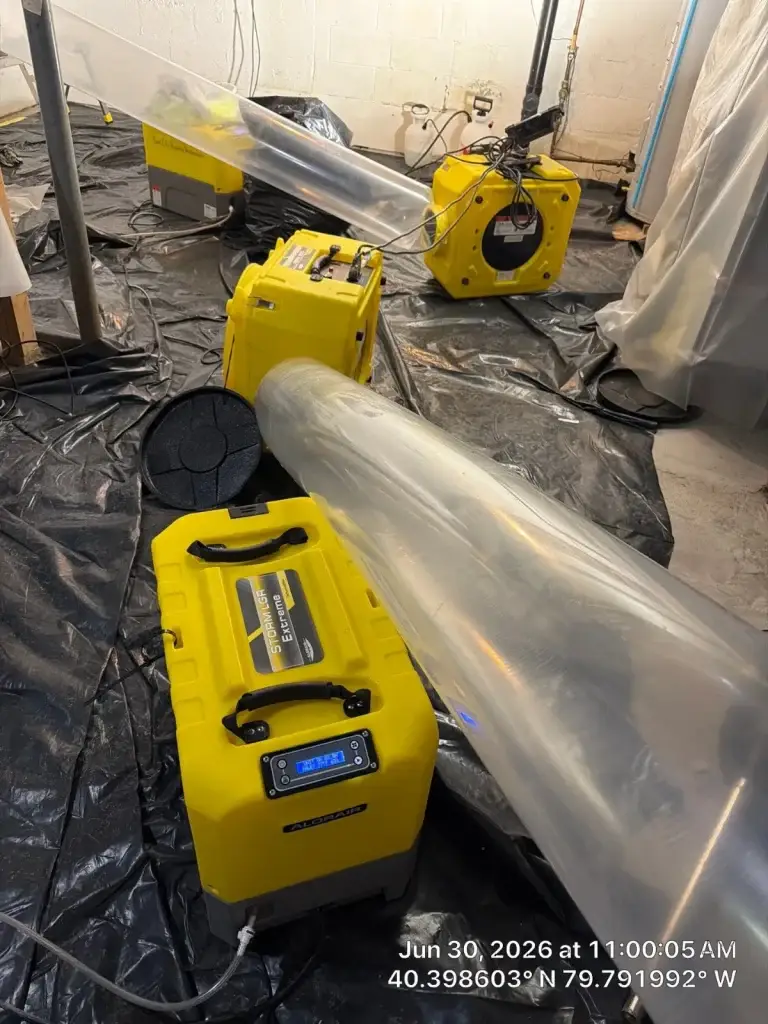
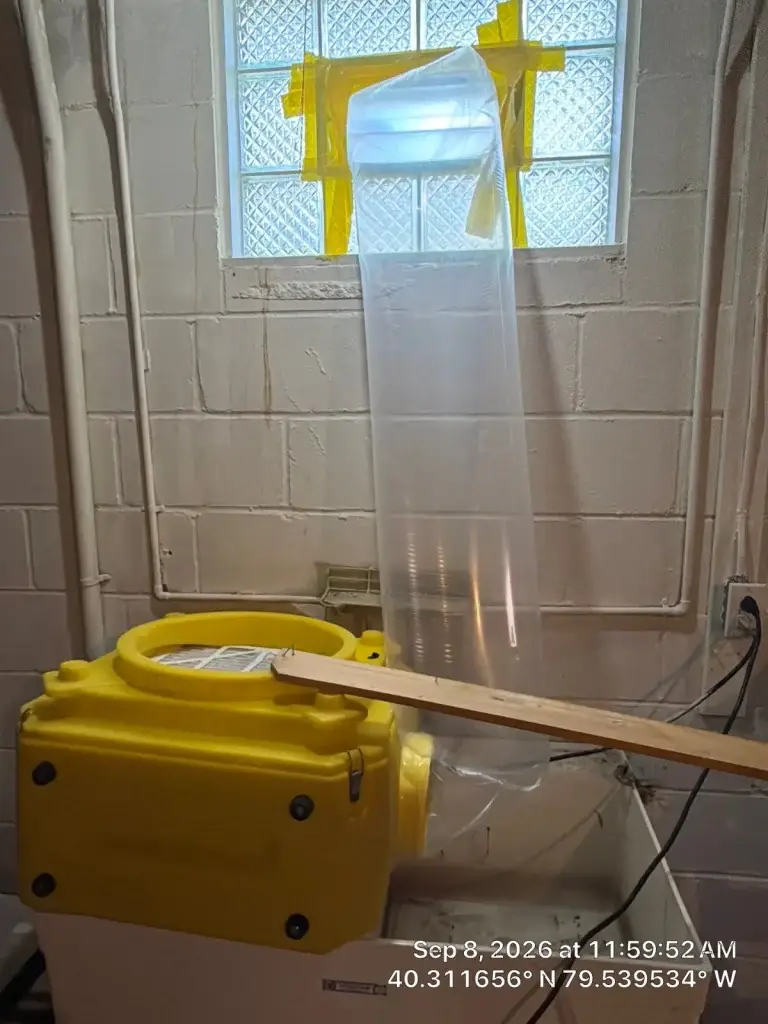
A crawl space that never quite dries out, a basement that's musty every spring, or a commercial building fighting humidity all start the same way with us: a comprehensive moisture evaluation before we recommend a single piece of equipment. From there we design, install, and maintain the right dehumidification system for a home or a job site, backed by a full in-house crew that also handles any mold or moisture damage already sitting behind the walls.
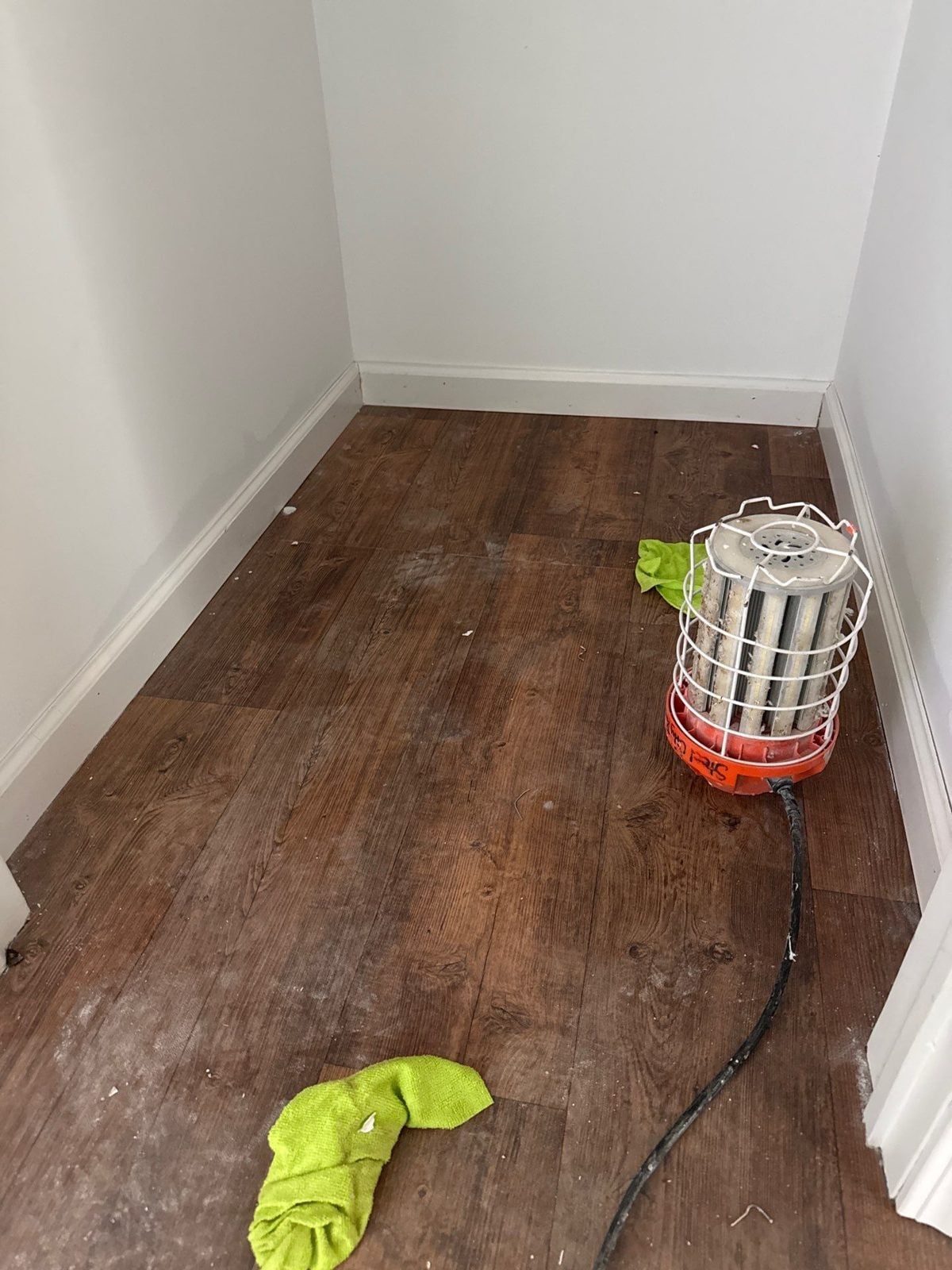
We measure relative humidity in the actual problem areas and identify what's driving it before recommending any equipment, residential or commercial.
Pittsburgh's older housing stock and heavy clay soil mean a lot of crawl spaces and basements run damp for months at a time, humid enough for mold and dust mites but never obviously "flooded." A dehumidifier for a crawl space is the single most common call we get, followed closely by basements that stay musty no matter how many windows get opened. In both cases, a box-store unit sized by guesswork rarely solves the problem for good.
That's why every dehumidification project, residential or commercial, starts with a comprehensive moisture evaluation. We measure relative humidity throughout the space and trace it back to its source, groundwater, poor ventilation, a plumbing leak, or normal seasonal moisture, before we ever talk about equipment. In crawl spaces especially, we often pair the dehumidifier with vapor barrier installation, since sealing off ground moisture and pulling the remaining humidity out of the air work best done together.
On the residential side, that means right-sized units for a single crawl space or basement, ducted whole-house systems, and ongoing maintenance to keep them running. On the commercial and industrial side, we design and install permanent dehumidification systems for buildings, service and repair equipment already in place, and rent out temporary and industrial-grade units for flood restoration, construction drying, and seasonal humidity control on active job sites.
Because we're a full in-house general contractor, we're not limited to installing a unit and leaving. If the humidity already led to mold growth, wood rot, or damaged drywall, the same crew scopes and handles that repair as part of the same project, so it's one quote and one crew instead of coordinating between separate companies. Our crew brings 30+ years of combined hands-on experience to dehumidification work and covers the full 60-mile service area around Pittsburgh, 24/7.
Whether it's one crawl space or a commercial building, every dehumidification project follows the same five steps, starting with a real evaluation and ending with a system that actually holds the humidity down after we've left.
We measure relative humidity throughout the property, crawl space, basement, whole house, or commercial building, to see exactly what's happening before recommending anything.
We trace the humidity back to what's feeding it, groundwater, poor ventilation, a plumbing issue, or ordinary seasonal moisture, since the fix depends on the cause.
We recommend equipment sized for the space and the situation, a residential crawlspace or basement unit, a whole-house ducted system, or a permanent commercial system or rental unit for a job site.
Our crew installs the system with proper drainage. In crawl spaces we frequently pair it with vapor barrier installation so ground moisture is addressed at the source, not just pulled from the air.
A final check confirms the system is holding your target humidity level, and we stay available afterward for routine maintenance, repair on existing commercial units, or rental support.
The equipment and the approach both change depending on whether it's a house or a commercial property. Here's how we split it.
For homeowners dealing with a damp crawl space, a musty basement, or humidity that's a problem in more than one room.
Crawl spaces hold moisture against wood framing better than almost any other part of a house, and it's the most common dehumidification call we get. A properly sized crawlspace dehumidifier, usually paired with sealing and a vapor barrier, keeps that humidity from ever reaching a level where mold or rot can start.
From a single musty corner to a basement that's damp every spring, we size the unit to the square footage and address whatever's feeding the moisture, not just the symptom.
For humidity that's a problem in more than one room, a ducted whole-house system ties into your existing HVAC to manage it from one central unit, installation assistance included, and it doubles as one of the more effective ways to prevent mold before it starts.
For property managers, businesses, and job sites that need equipment sized well beyond a single room.
We design and install permanent commercial dehumidification systems for offices, storage buildings, and light-industrial space, sized for the square footage and moisture load, scheduled around your operating hours whenever possible.
Already have a commercial system in place, whether we installed it or not? We service, repair, and maintain existing commercial dehumidification equipment to keep it running at capacity.
For flood restoration, construction drying, or a seasonal humidity spike, we offer temporary dehumidifier rental, plus industrial-grade rental units for larger-scale jobs that need more capacity than a standard commercial unit.
Plenty of places will sell or rent you a dehumidifier. Fewer will run a comprehensive moisture evaluation first, size the system to match the space, whether it's a crawl space or a commercial building, and handle whatever mold or moisture damage the humidity already caused. That's the difference we're built around.
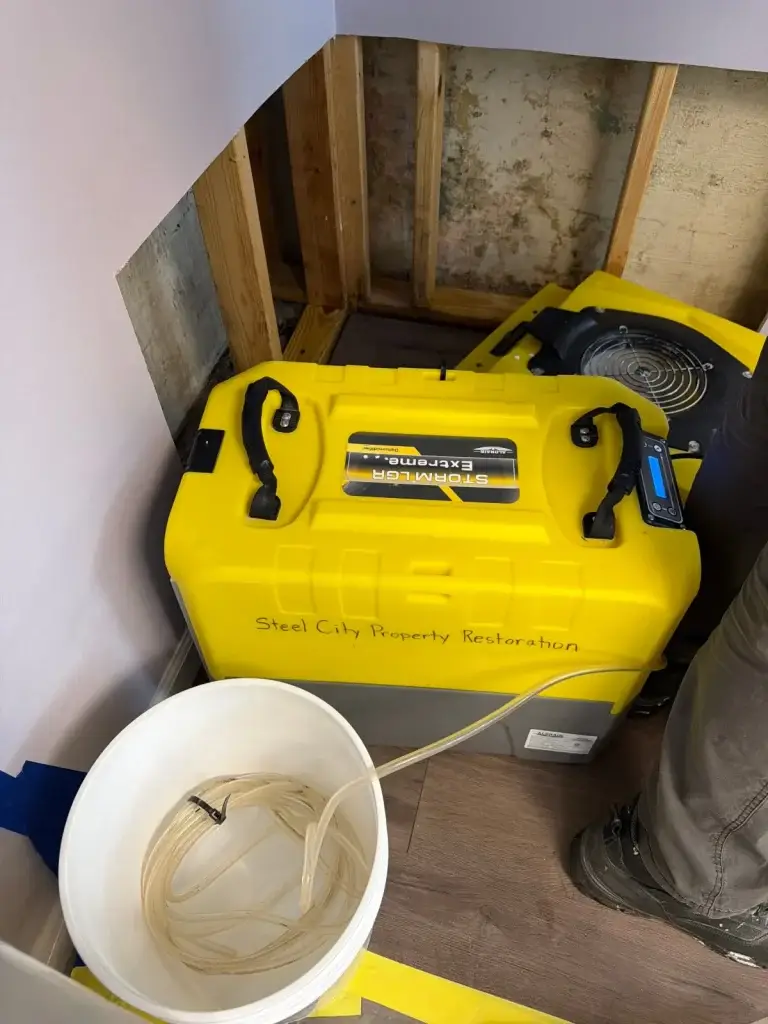
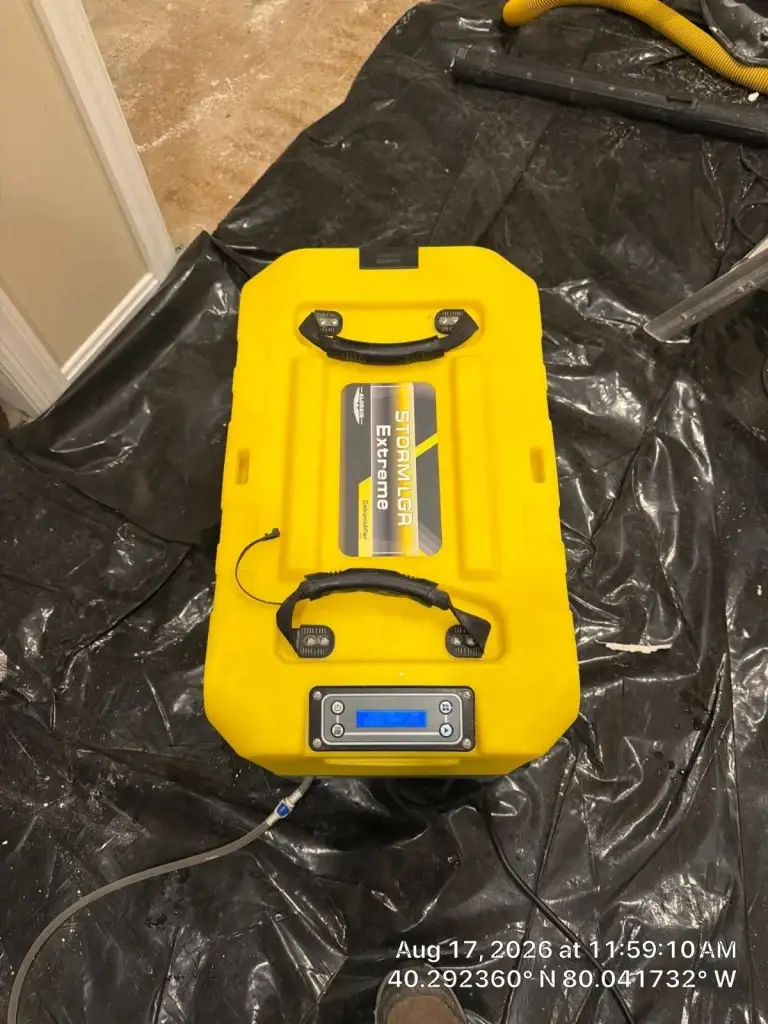
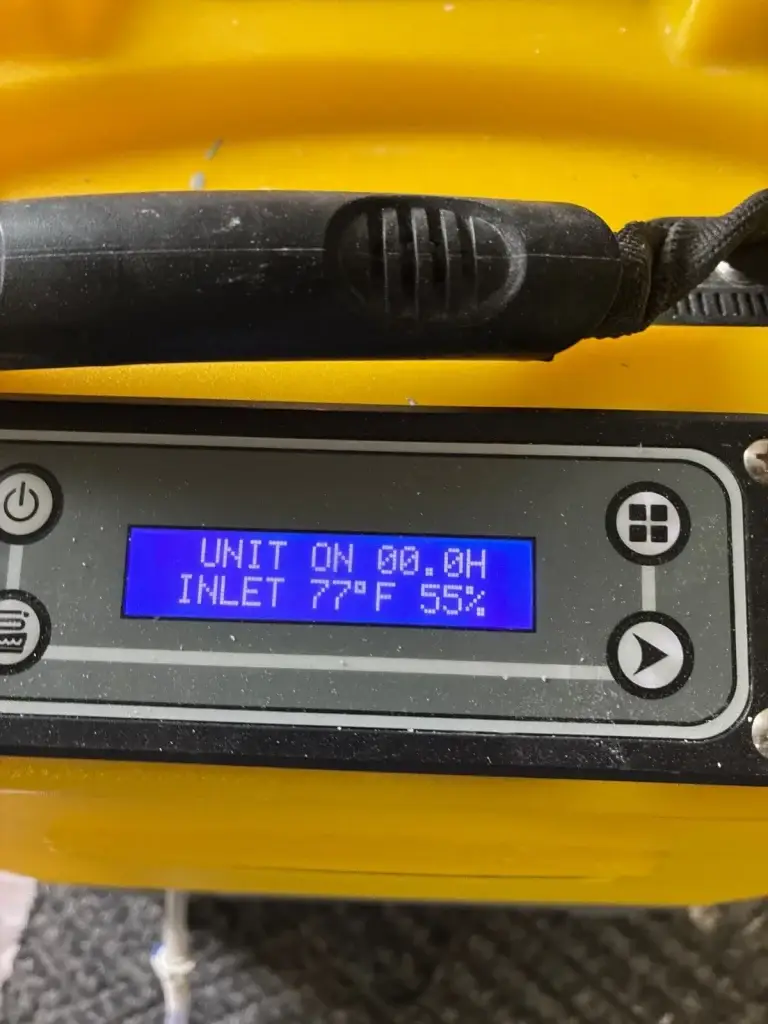
Commercial dehumidifiers and drying setups we have used to bring basements, crawl spaces and flooded rooms back to safe humidity.
Common questions homeowners and businesses ask before booking a dehumidification job with us.
Most contractors recommend keeping relative humidity under 55 percent to discourage mold growth and dust mites, and that holds for crawl spaces and basements alike. The right target still depends on the space, so during your comprehensive moisture evaluation we measure the actual reading and recommend a level to aim for rather than a generic number.
Often, yes. High humidity in a crawl space with no visible mold yet is usually an early warning, and by the time mold shows up on a joist or subfloor, moisture has already been sitting there for a while. Installing a dehumidifier for your crawl space before that happens is typically a smaller job than remediating mold after it takes hold.
Crawl spaces usually need a dedicated unit built for a smaller, harder-to-access space, often paired with a vapor barrier to stop ground moisture from evaporating upward in the first place. Basements are more open, so basement dehumidification more often means a single properly sized unit with a drain line, sometimes paired with drainage work if water intrusion is part of the problem.
Yes. For businesses and property managers we design and install permanent commercial dehumidification systems, handle repair and maintenance on units already in place, and offer temporary and industrial dehumidifier rental for flood restoration, construction drying, and seasonal humidity control on active job sites.
It depends on the size of the space and the equipment it needs, so we don't publish a flat rate for residential or commercial work. We offer a free, no-obligation comprehensive moisture evaluation and quote so you know the real cost for your specific situation before any work begins.
Yes. In addition to standalone units for a single crawlspace or basement, we install ducted whole-house dehumidification systems that tie into your existing HVAC ductwork to manage humidity across the entire home from one central unit.
Often, yes. In crawl spaces especially, a dehumidifier and a vapor barrier work together, the vapor barrier keeps ground moisture from evaporating into the space and the dehumidifier handles what's already in the air. We regularly pair the two on crawlspace repair and encapsulation projects and on mold remediation jobs where ground moisture is part of the cause.
Drainage lines and filters should be checked periodically to keep any system running at full capacity. We offer routine maintenance plans for residential units and repair and maintenance service for commercial systems, including ones we didn't originally install.
Get a free comprehensive moisture evaluation and find out where the moisture is coming from, and what it'll actually take to fix it, whether that's a crawl space, a basement, or a commercial building.