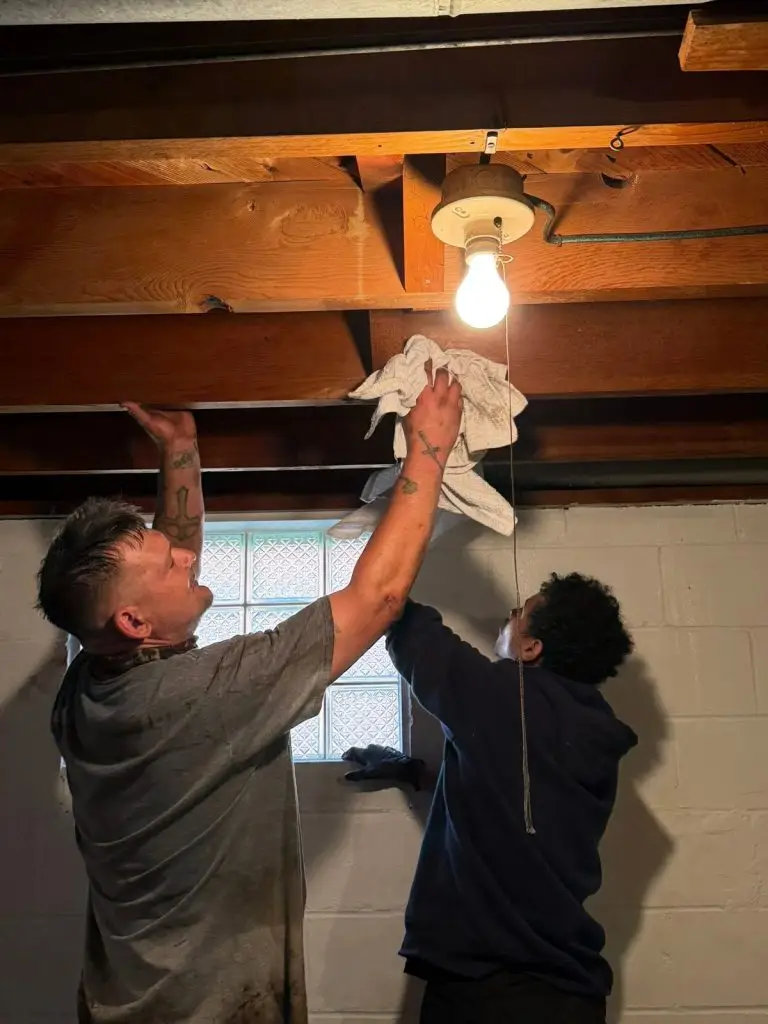
A musty smell when you head downstairs, dark spots creeping along the bottom of a block wall, a cardboard box that feels damp to the touch. Basements are the most common place we find mold in Pittsburgh-area homes, and for good reason: they sit below grade, they stay cool, and in Western Pennsylvania they deal with a lot of groundwater. Here is how to tell what you are dealing with, how to get rid of mold in your basement when the problem is small, and when it is time to bring in a professional.
What basement mold looks like
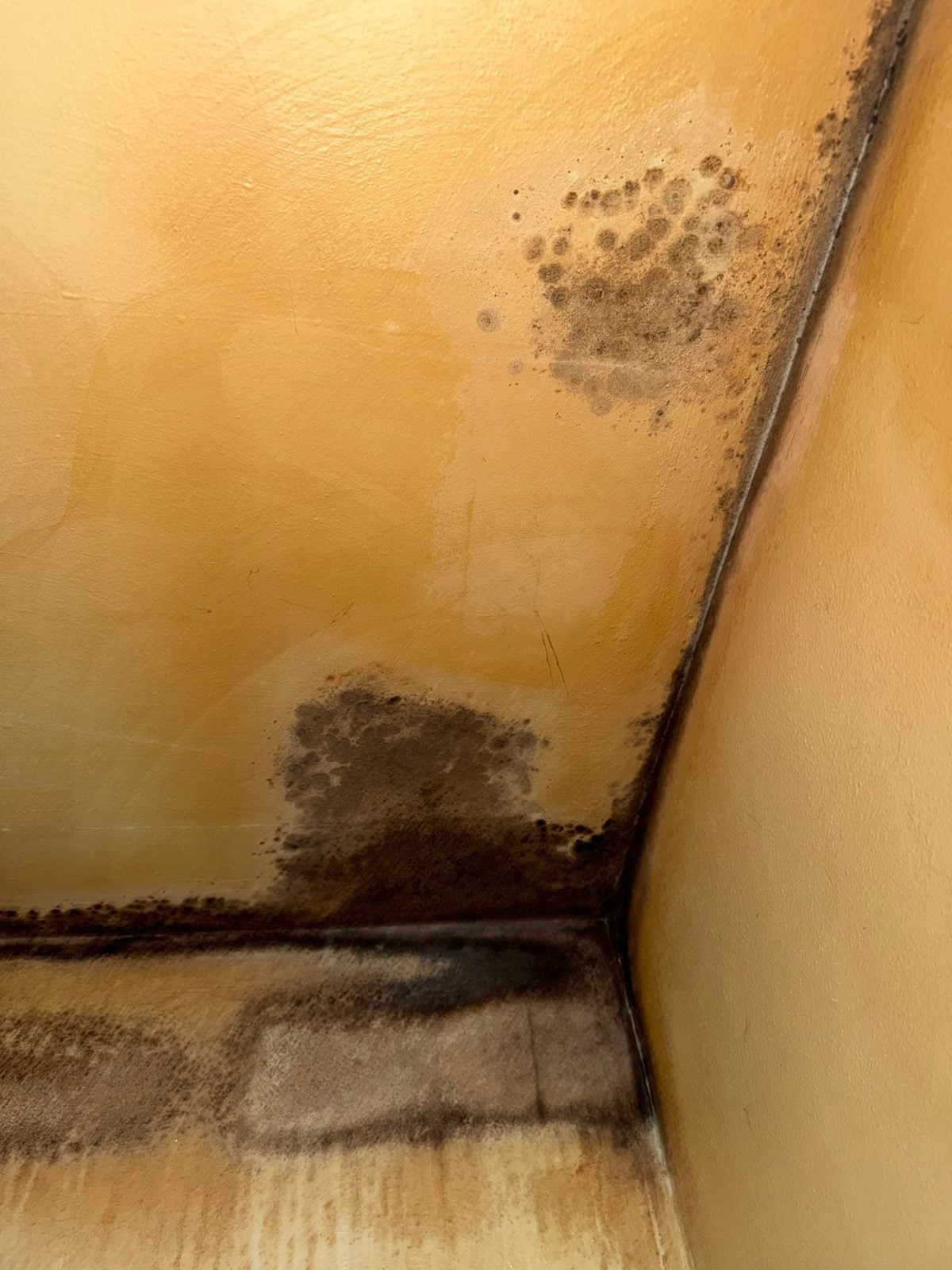
Mold in a basement rarely looks like a single tidy patch. Depending on the surface and the species, you might see:
- Black, green or gray speckles on drywall, wood framing, floor joists or the paper backing of insulation.
- White, fuzzy growth on wood or stored items. This is often confused with efflorescence, the white, chalky mineral deposit left behind when water moves through concrete or block. A quick test: efflorescence dissolves in water and crumbles into powder, mold does not.
- Dark staining that keeps spreading along the bottom of walls, around windows, behind furniture pushed against an exterior wall, or under carpet.
- A persistent musty, earthy odor, even when you cannot see anything. Hidden mold behind finished walls or under flooring is common in finished basements.
Is the mold in my basement dangerous?
Any mold growing indoors is worth taking seriously. Mold releases spores and, in some cases, mycotoxins, and exposure is linked to allergy symptoms, coughing, sneezing, watery eyes, headaches and asthma flare-ups. People with asthma, allergies, weakened immune systems or mold sensitivity (including CIRS) tend to react more strongly.
You cannot judge how harmful a mold is by its color, and “black mold” is not a single species. That is why we send samples to an independent lab instead of guessing. What matters most is how much growth there is, where it is, and what is feeding it.
Can mold in the basement affect the rest of the house?
Yes. Warm air rises through a house and pulls air up from the lowest level to replace it, a pattern known as the stack effect. Spores and musty odors from the basement can travel upstairs through stairwells, gaps around pipes and wiring, and especially through ductwork if your furnace or air handler sits in the basement. If you notice the smell on your main floor, or allergy symptoms that ease when you leave the house, the basement is a good place to start looking.
Why Pittsburgh basements are so prone to mold
Mold needs three things: moisture, a food source (wood, paper, drywall, dust, cardboard) and time. Basements around Pittsburgh tend to supply all three:
- Older foundations. Much of the region’s housing stock has stone, brick or concrete block foundations that were never built to be fully waterproof.
- Hillsides and heavy clay soil. Homes built into slopes collect runoff on the uphill side, and clay soils hold water against foundation walls.
- Humid summers. Warm, damp outdoor air condenses on cool basement walls, pipes and floors, even when nothing is actually leaking.
- Gutters and grading. Downspouts that dump water right at the foundation, or soil that slopes toward the house, send water exactly where you do not want it.
- Plumbing and appliances. Water heaters, washing machines, sump pits and slow pipe leaks are frequent hidden sources.
How to get rid of mold in your basement (small areas)
If the affected area is small, generally under about 10 square feet (roughly a 3 ft by 3 ft patch), the U.S. EPA considers it something most homeowners can clean themselves, as long as nobody in the home has health concerns that make exposure risky. Here is the approach we recommend:
- Find and stop the water first. Cleaning mold without fixing the moisture source only buys you time. Look for leaks, condensation, seepage at the base of walls and wet spots after rain.
- Protect yourself. Wear an N-95 respirator, non-vented goggles and long gloves. Keep kids and pets out of the area.
- Contain the area. Close doors to the rest of the house and turn off the HVAC system if it pulls air from the basement, so you do not spread spores.
- Remove what cannot be saved. Porous materials with mold growing on them, like carpet, ceiling tiles, cardboard and moldy drywall, usually need to be bagged and thrown out.
- Scrub hard surfaces. Clean concrete, block, metal and sealed wood with a detergent and water solution and a stiff brush. Bleach is not necessary for most cleanups, and you should never mix bleach with ammonia or other cleaners.
- Dry everything completely. Run fans and a dehumidifier until surfaces are fully dry. Mold can start growing on wet materials within 24 to 48 hours.
- Do not paint over it. Paint or sealer applied over mold hides the problem but does not stop it, and it tends to peel as the growth continues underneath.
Keep an eye on the area for a few weeks. If the staining or the smell comes back, the moisture problem has not been solved and the mold is likely more widespread than it looked.
When to call a professional
Do-it-yourself cleanup has real limits. It is time to call a mold remediation company when:
- The growth covers more than about 10 square feet, or you keep finding more as you look.
- Mold is on or inside finished walls, insulation, subfloors or framing.
- The musty smell is strong but you cannot find the source.
- The mold followed flooding, a sewage backup or a burst pipe.
- Your HVAC system or ductwork may be involved.
- Someone in the home has asthma, a compromised immune system or mold-related illness.
- You have cleaned it before and it came back.
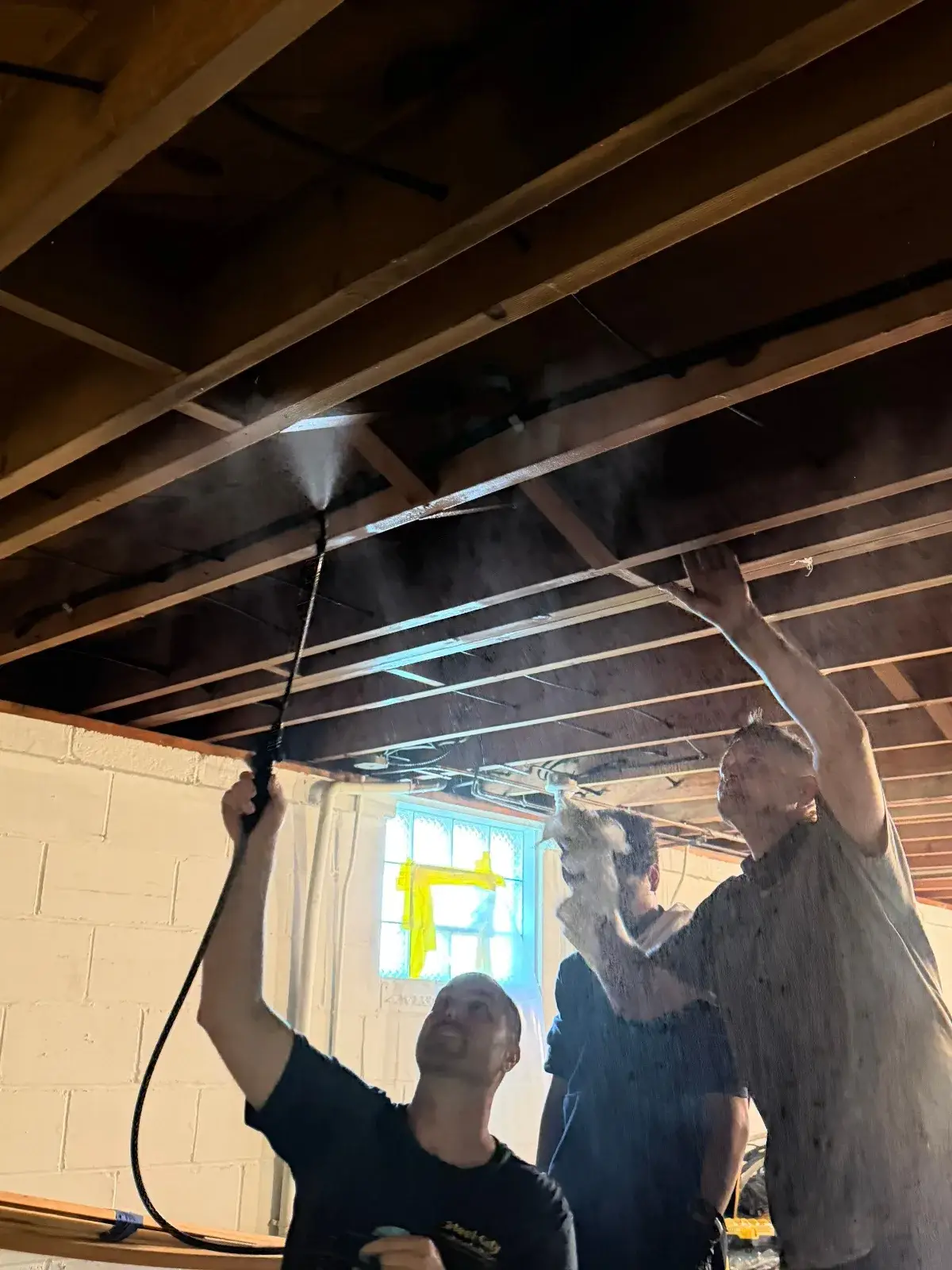
Professional mold removal is different from a deep clean. At Steel City Property Restoration, every job starts with a free inspection and lab testing through our ProLab partnership, so the plan is based on real data. From there we contain the work area, remove or clean affected materials, address the moisture source that caused the growth, and, when walls or floors have to come out, our own crew handles the rebuild.
How much does basement mold removal cost?
There is no honest flat price for mold removal, because cost depends on how large the affected area is, what materials are involved, and what it takes to fix the moisture problem behind it. A small patch on a block wall and a finished basement with mold behind the drywall are very different jobs. That is why we offer a free, no-obligation inspection and quote, so you know the real cost for your basement before any work begins.
How to prevent mold in your basement
Once the mold is gone, keeping it gone comes down to controlling moisture:
- Keep humidity in check. The EPA recommends keeping indoor humidity below 60 percent, ideally between 30 and 50 percent. A basement dehumidifier, or a whole-space dehumidification system, makes the biggest difference in summer.
- Move water away from the foundation. Clean gutters, extend downspouts several feet from the house and make sure soil slopes away from your walls.
- Dry spills and leaks fast. Aim to dry anything that gets wet within 24 to 48 hours.
- Insulate cold surfaces. Wrapping cold water pipes and insulating rim joists cuts down on condensation.
- Store smart. Use plastic bins instead of cardboard, keep items off the floor and leave a gap between storage and exterior walls.
- Do not forget the crawlspace. If part of your home sits over a crawlspace, crawlspace encapsulation keeps ground moisture from feeding mold under your floors.
Basement mold FAQ
Can I use bleach to kill mold in my basement?
For most cleanups you do not need it. Detergent and water with good scrubbing removes mold from hard surfaces, and bleach does not penetrate porous materials like wood or drywall. If you do use bleach, ventilate well and never mix it with ammonia or other cleaning products.
Will a dehumidifier get rid of existing mold?
No. A dehumidifier helps stop new growth by drying the air, but mold that is already there still has to be cleaned or removed.
Does homeowners insurance cover basement mold?
It depends on your policy and the cause. Mold that results from a sudden, covered event such as a burst pipe is more likely to be covered than mold from long-term seepage or humidity. Check with your insurer. We are happy to help document the damage for a claim.
Talk to a local mold expert
If you are seeing or smelling mold in your basement anywhere in the Greater Pittsburgh area, we can help you figure out what it is, where it is coming from and what it will take to fix it. Request a free inspection and quote or call us at 412-598-5435. We are available 24/7 for mold and water damage emergencies.